How to Tell If a China Best Door Is Fire Rated?

Time:2026-10-10 Author:Isabella
0%

Choosing the best China-made door is not only about steel thickness, finish, or price. Fire performance depends on the complete door assembly. That assembly includes the door leaf, frame, hinges, closer, latch, glazing, seals, and installation method. If one component differs from the tested design, the rating may no longer apply. How to tell if a door is fire rated requires careful checking, not visual guessing.

Lori Greene, an architectural hardware and fire-door code consultant, puts the principle simply: “A fire door is a system, not just a door.” Her view is practical. Look for a permanent certification label on the door and frame. Check the manufacturer’s test report, rating duration, approved hardware, and identification number. Then confirm those details with the listed certification body or the manufacturer’s official records. A supplier’s brochure is useful, but it is not enough evidence.

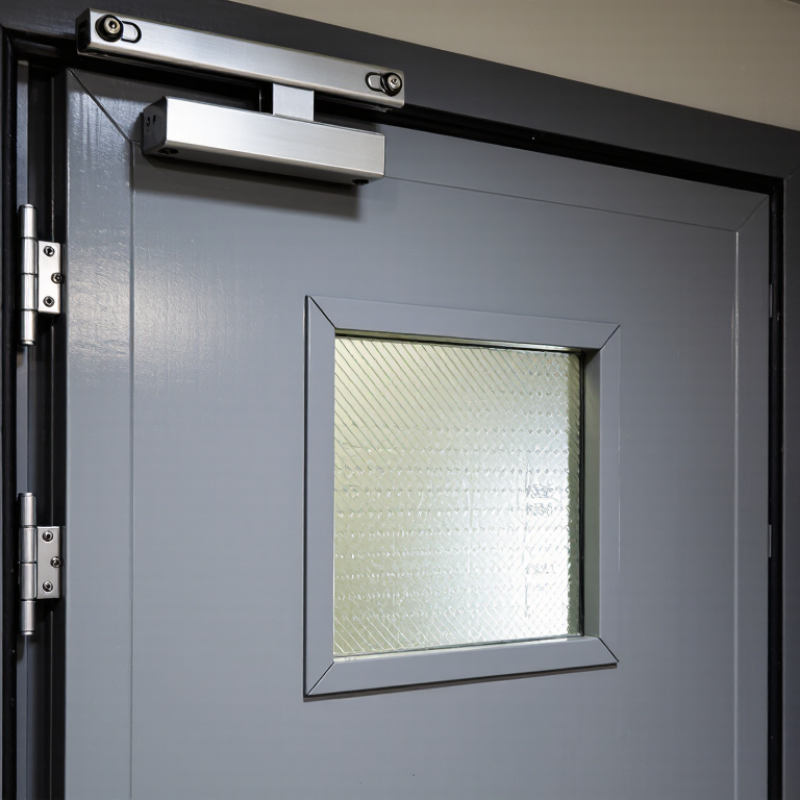
Inspect the installation closely. The closer should shut the door fully. The latch should engage without force. Intumescent seals should sit continuously around the frame. Glazing should carry its own fire-rated marking. Measure the gaps, because small installation errors can matter during a fire. A photograph may look convincing. It can still prove almost nothing.

This guide also recognizes an uncomfortable reality: documentation can be incomplete, translated poorly, or disconnected from the supplied product. Ask for traceable records before purchasing. Compare every visible component with the approved assembly. When uncertainty remains, consult a qualified fire-door inspector or local authority. Reliable verification is slower, but it protects people better than a confident assumption.
How to Tell If a China Best Door Is Fire Rated?

Identify the Door’s Fire-Rating Label and Certification Marks

How to Tell If a China Best Door Is Fire Rated?

A fire-rated door should carry a clear, permanent label. Check the door edge, hinge side, or frame near the head. The label should state the fire-resistance duration, such as 30, 60, or 90 minutes. It should also identify the applicable testing standard and certification body. Vague wording like “fireproof quality” is not enough.

Look for a traceable certificate number, manufacturing information, and approved door assembly details. A reliable certification mark should connect to an official test report or online verification record. The report must match the actual door, frame, glazing, hinges, closer, seals, and lockset. A certified leaf can fail when paired with unsuitable hardware. I have seen labels that looked convincing but lacked supporting records.

Inspect the label closely. It should not appear newly glued, blurred, or easily removed. Compare its information with the supplier’s technical file and project requirements. Confirm whether the rating applies to the complete assembly, not only the door panel. Requirements can differ between countries and building types. An experienced inspector should verify the documents independently, especially when translations are incomplete. I would not rely on a photograph alone. On-site evidence matters. One practical detail is often missed: damaged intumescent seals may reduce protection, even when the certification label remains intact.

How to Tell If a China Best Door Is Fire Rated

Identify the door’s fire-rating label, tested assembly information, and certification marks before installation.

The chart shows common fire-door rating durations expressed in minutes. A genuine fire-rated door should have a permanent label that states the rating, identifies the tested door assembly, and includes a certification or listing mark from an accepted testing body. Always verify that the label matches the complete assembly, including the frame, hardware, glazing, and installation requirements. Rating options can vary by local building code and test standard.

Verify the Manufacturer’s Fire-Test Documentation

How to Tell If a China Best Door Is Fire Rated?

A fire-rated claim should begin with evidence, not a sales label. In 2022, the National Fire Protection Association estimated 1,504,500 fires in the United States, causing about $18.1 billion in property damage. A door assembly can slow fire spread, but only when its tested construction remains unchanged. Ask the manufacturer for the complete fire-test report, not only a certificate image.

Check the report’s laboratory, test standard, rating period, specimen size, core, frame, glazing, hinges, locks, and closer. ISO/IEC 17025 accreditation can support laboratory competence, but it does not automatically approve every product. The report should identify the exact door configuration. A 90-minute test does not prove that a thinner, wider, or differently glazed door has the same rating. Small changes matter.

Look for testing under recognized methods, such as NFPA 252 or an applicable national standard. Confirm the report number directly with the laboratory when possible. Also request installation limits and approved hardware details. On real projects, missing hardware records often create avoidable doubt. I once underestimated the importance of frame anchoring; that was a useful correction. A convincing document can still be incomplete. Check dates, signatures, specimen photographs, and whether the test covered the supplied model. Do not accept “fireproof” as a technical classification. Ask for measurable performance, traceable documentation, and written confirmation that production matches the tested assembly.

Check the Door Leaf, Frame, Glass, and Hardware Ratings

How to Tell If a China Best Door Is Fire Rated?

A door is not fire rated because it looks heavy or has a thick steel skin. Its rating belongs to a tested door assembly. NFPA’s Fire Loss in the United States During 2022 recorded 1,504,500 fires, showing why small specification errors deserve attention. Start with the door leaf. Check its permanent label, rating period, test standard, and manufacturer details. A valid label should match the project’s required resistance, such as 60 or 90 minutes. Do not rely on a loose certificate.

Inspect the frame beside the leaf. It should carry a compatible label and correct anchoring details. Gaps matter. NFPA 80 limits installation tolerances, so an oversized gap can weaken smoke control. The glass must also be marked for fire-rated use. Ordinary tempered glass is not automatically suitable. Look for the tested glazing rating and approved glazing compound.

Hardware needs equal care. Hinges, locks, closers, latches, and vision panels should be listed for the same assembly. UL 10C evaluates positive-pressure fire tests, while local codes may require additional performance evidence.

Tips: Photograph every label before installation. Compare the leaf, frame, glass, and hardware schedules line by line. A practical site check often finds mismatched components. I have seen attractive doors fail this basic review. That is an uncomfortable reminder: appearance is useful, but evidence is stronger. Ask for the complete test report, installation instructions, and certification scope. A certificate covering the leaf alone may not cover the installed assembly.

Match the Door’s Rating to Local Fire-Safety Requirements

How to Tell If a China Best Door Is Fire Rated?

A door made in China is not automatically fire rated. The rating depends on tested construction, certified materials, and approved installation methods. Look for a permanent label showing the fire-resistance period, testing standard, and certification body. The label matters. A sales description alone is not reliable evidence.

Match the door’s rating to local fire-safety requirements. A building authority may require 30, 60, 90, or 120 minutes, depending on the wall, corridor, stairwell, or exit location.

Check the complete assembly, not only the door leaf. The frame, hinges, closer, latch, seals, and glazing must support the same rating. A highly rated leaf can fail when paired with unsuitable hardware. This is easy to overlook.

Tips:

Ask for the current test report and certification records before ordering. Confirm that the report covers the exact model, size, glazing, and hardware package. Request installation instructions from a qualified installer. Do not guess. Local inspectors may reject a door with missing labels or altered components. I have seen projects focus on the leaf while ignoring the frame. That mistake can delay approval. Check twice. Also, confirm whether local rules recognize the stated testing standard, since acceptance differs between regions.

Confirm Installation Quality and Ongoing Certification Validity

How to Tell If a China Best Door Is Fire Rated?

A high-quality China-made fire door is not proven by appearance alone. Fire performance belongs to the complete door assembly, including the leaf, frame, hinges, closer, seals, glass, and hardware. During a site inspection, check the fire label, certification number, tested size, and approved configuration. The documents should identify the manufacturer, product type, rating period, and applicable testing standard. A certificate for one model cannot automatically cover every size or hardware option.

Installation quality is equally important. The frame must sit squarely, with secure anchors and no visible distortion. Check the gaps around the door leaf with a calibrated gauge. Uneven gaps can prevent the seals from working correctly. Intumescent strips should be continuous, firmly fitted, and free from paint damage. The closer must shut the door fully without slamming, while the latch should engage completely. Keep the area clear of wedges and temporary hold-open devices. Small details matter.

Certification also needs ongoing attention. Ask for the latest surveillance record, renewal date, and traceable test report. Confirm that later modifications match the certified assembly. Replacing hardware may affect performance. This is often overlooked. A clean installation can still be uncertified. Conversely, valid paperwork cannot repair poor workmanship. Have an independent, qualified inspector compare the installed door with the approved documents. Records, photographs, and inspection dates should remain available for future maintenance.

How to Tell If a China Best Door Is Fire Rated? - Confirm Installation Quality and Ongoing Certification Validity

Verification Dimension What to Check Reliable Evidence or Benchmark Pass Indicator Recommended Record or Action
Fire-rating designation Confirm the required rating for the opening and compare it with the door, frame, and hardware documentation. A permanent, legible certification label or approved marking showing the fire rating, test standard, and product identification. The complete doorset rating meets or exceeds the rating required by the approved wall assembly and local code. Photograph the label and retain the certificate, test report, and installation instructions.
Applicable test standard Identify the standard used to evaluate the doorset in the project jurisdiction. Examples include UL 10C for positive-pressure fire tests, EN 1634-1 for fire-resistance and smoke-control testing, or BS 476-22 where that standard is accepted. The stated standard is accepted by the authority having jurisdiction and matches the product certificate. Record the standard edition, certificate number, rating, and scope of application.
Door and frame compatibility Check that the leaf, frame, glazing, seals, hinges, lockset, closer, and threshold are part of an approved assembly or permitted substitution. Doorset certification documents, listing information, approved hardware schedule, and manufacturer installation instructions. No unapproved component has been added, removed, or substituted. Compare installed components with the approved schedule and document any deviation before acceptance.
Certification label condition Inspect the label for legibility, attachment, rating, test standard, and identification details. The label is permanent and remains attached to the door or frame in the location specified by the certification scheme. The label is readable and has not been painted over, removed, altered, or damaged. Do not rely on an unverified paper claim when the required physical label is missing; request formal clarification.
Door leaf alignment Check that the leaf is square, plumb, correctly seated, and free from warping or excessive damage. The leaf operates without binding and sits evenly against the frame and seals when closed. No visible distortion, open joints, impact damage, or field modifications compromise the assembly. Repair alignment defects using approved methods; replace damaged components when repair is not permitted.
Clearances around the leaf Measure the gaps at the head, jambs, meeting stiles, and bottom of the door. Use the limits in the approved doorset instructions and the adopted code. NFPA 80 commonly limits head and jamb clearances to approximately 1/8 inch (3.2 mm), subject to the applicable edition and assembly. Measured gaps remain within the approved installation tolerance at every inspected location. Record measurements with a feeler gauge or calibrated tool and correct excessive gaps.
Self-closing function Open the door fully and release it from different positions. The door closes completely and latches without manual assistance, obstruction, or excessive slamming. The closer returns the leaf to the frame and the latch engages every time. Inspect during commissioning and periodic maintenance; adjust or replace the closer with an approved unit.
Positive latching Verify that the latch engages the strike fully when the door closes. The latch is not taped, wedged, disabled, or held back by an unauthorized device. The door remains secured in the frame without propping or temporary restraints. Remove unauthorized hold-open devices and investigate repeated latch failures.
Intumescent and smoke seals Inspect seals for continuity, correct location, compression, contamination, paint, cuts, and missing sections. Seal type, size, and position match the certified assembly and installation instructions. Seals are continuous, undamaged, firmly attached, and not obstructed by hardware or decoration. Replace seals only with approved equivalent products and document the replacement date.
Hardware and glazing Check hinges, locks, viewers, handles, closers, vision panels, glazing beads, and fasteners. Each item is fire-rated or specifically permitted by the certified doorset documentation. Hardware is secure, functional, undamaged, and installed in the approved configuration. Keep hardware records and obtain approval before drilling, cutting, or changing components.
Frame anchorage and wall interface Inspect frame fixing, packers, anchors, grout or approved backing, and the joint between frame and wall. Installation follows the tested or assessed wall-and-frame configuration and uses approved materials. The frame is stable, square, securely anchored, and free from unapproved combustible gaps or fillers. Obtain installer documentation and correct interface defects before final approval.
Penetrations and field modifications Look for site-drilled holes, cut-outs, cable routes, louvers, letter plates, kick plates, or altered vision panels. The modification is expressly permitted by the certification documentation or supported by an approved engineering assessment. No unapproved alteration affects the integrity of the leaf, frame, seals, or hardware. Suspend acceptance and obtain written technical approval for any questionable modification.
Certificate validity status Confirm that the certificate or listing remains current and covers the exact product, rating, configuration, and market. Verification through the issuing certification body’s current directory or written confirmation; validity rules differ by scheme. The record is active, not withdrawn, suspended, expired, superseded, or outside its stated scope. Recheck before procurement, delivery, handover, and whenever the certification scheme issues an update.
Routine inspection frequency Establish a documented inspection program for operation, damage, clearances, seals, hardware, and signage. Follow the adopted fire code, building policy, and certification instructions. Some jurisdictions require documented inspections at defined intervals. Inspection dates, findings, corrective actions, and responsible personnel are recorded. Use a signed checklist and retain records for the period required by local regulations.
Final acceptance decision Review documents, physical inspection results, corrective actions, and authority requirements together. Acceptance by the project’s qualified inspector, fire-safety professional, or authority having jurisdiction, as applicable. The doorset is documented, correctly installed, operational, and supported by current certification evidence. Mark the opening as accepted only after all nonconformities are closed and evidence is archived.

Note: Fire-door requirements, allowable clearances, inspection intervals, and certification rules vary by jurisdiction and test standard. Always follow the approved doorset documentation and the requirements of the authority having jurisdiction.

FAQS

What proves that a door is fire rated?

A tested door assembly proves fire performance, not a heavy appearance or thick steel skin. Check the permanent label, rating period, test standard, and manufacturer details. Appearance helps, but evidence matters more.

Can a loose certificate confirm the whole door assembly?

No. A certificate may cover only the door leaf. Confirm coverage for the frame, glass, hinges, locks, closer, seals, and other hardware. The approved configuration should match the installed door.

What should I inspect on the door frame?

Check the frame label, anchoring method, alignment, and visible distortion. The frame should sit squarely beside the leaf. Small gaps matter. Use a calibrated gauge to check installation tolerances.

Is ordinary tempered glass suitable for a fire-rated door?

Not automatically. The glass should carry a fire-rated marking and match the tested assembly. Also verify the approved glazing compound and installation method.

Which hardware needs checking?

Inspect hinges, locks, closers, latches, seals, and vision panels. Each item should suit the same tested assembly. The closer must shut the door fully, and the latch must engage completely.

How can I identify poor installation quality?

Look for uneven gaps, loose anchors, damaged seals, paint on intumescent strips, or a door that will not close properly. Remove wedges and temporary hold-open devices. Clean installation is not enough.

How should certification remain valid after installation?

Request the latest surveillance record, renewal date, traceable test report, and installation instructions. Confirm that later hardware changes match the certified configuration. Replacing one small component may affect performance.

What records should be kept for future inspections?

Photograph every label before installation. Keep approved schedules, test reports, certificates, inspection dates, and maintenance records together. Compare the installed components with the documents line by line. I may overlook something without a checklist.

Conclusion

How to tell if a door is fire rated begins with checking the label or certification marks on the door assembly. The label should clearly state the fire-resistance rating, testing standard, and approval information. Buyers should also request official fire-test documentation from the manufacturer and confirm that it applies to the specific door model, materials, and configuration rather than a similar product.

A complete inspection must include the door leaf, frame, glass panels, seals, hinges, locks, closers, and other hardware, since every component can affect fire performance. The selected rating should match local building and fire-safety requirements for the intended location. Proper installation is equally important: gaps, alignment, fasteners, and sealing materials must follow approved specifications. Finally, verify that certificates remain valid and that any changes to the design, components, or production process have not affected the door’s approval status.

Isabella

Isabella

Isabella is a dedicated marketing professional with a sharp focus on driving brand growth and engagement through strategic content creation. With an extensive background in digital marketing, she combines her passion for storytelling with her keen understanding of industry trends to deliver......