Choosing an exterior door in 2026 requires more than comparing advertised insulation values. The frame, glass, weatherstripping, threshold, and installation all influence energy performance. A door can carry an impressive label yet leak air around its edges. Small gaps matter.
So, what is the most energy efficient exterior door? The dependable answer is usually a well-installed, insulated fiberglass or steel door with a low U-factor, tested air leakage, and climate-appropriate glazing. The U.S. Department of Energy reports that windows account for approximately 25% to 30% of residential heating and cooling energy use. Doors form a smaller opening area, but poorly sealed entrances can still create noticeable drafts near floors and hallways. That practical difference is easy to miss.
This guide uses evidence from the U.S. Department of Energy, ENERGY STAR, and the National Fenestration Rating Council (NFRC). NFRC labels help consumers compare U-factor, solar heat gain coefficient, visible transmittance, and air leakage. ENERGY STAR specifications also identify products that meet regional performance requirements, although certification does not guarantee identical savings in every home. Climate zone, orientation, exposure, and heating system still matter. The 2026 market may offer smarter materials and improved seals, but marketing language can move faster than reliable testing. Check the label. Inspect the installation. Question broad claims.
Personal experience also supports a simple lesson: a heavy insulated door feels substantial, but comfort depends on the complete assembly. A professional installer should verify square alignment, compression, threshold contact, and perimeter sealing. Even the best slab performs poorly when the rough opening is uneven. This guide will examine those details before recommending the most efficient exterior door for different homes and climates.
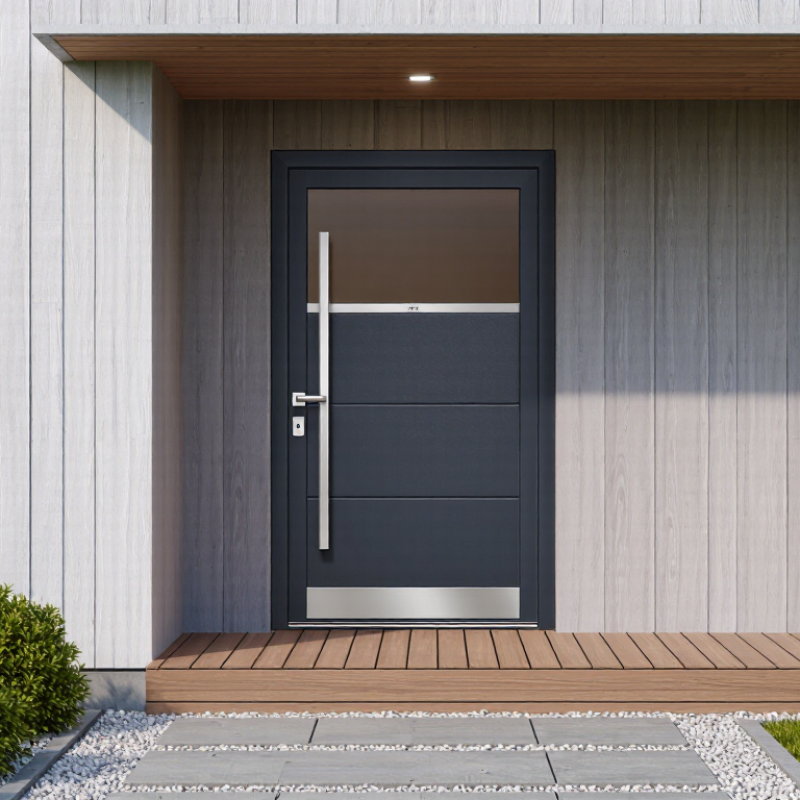
An energy-efficient exterior door is more than a thick slab. Its performance depends on the door, frame, seals, and installation working together. Look for a clearly stated whole-unit U-factor: lower values generally indicate less heat transfer. Check the climate-appropriate energy rating, too, since a door suited to a cold region may not be ideal in a hot, sunny location. Ratings matter.
Insulation helps, but construction details count. Fiberglass and insulated steel doors often resist heat flow better than basic, uninsulated designs. A glass panel can still perform well when it uses multiple panes, low-emissivity coatings, and insulated spacers. Ask for documented performance values rather than relying on phrases such as “energy saving.” Those words alone prove little.
Pay attention to the frame and the threshold. Weatherstripping should compress evenly when the door closes, without leaving visible gaps at the corners. On a windy day, a small leak near the latch can make a hallway feel cold. A skilled installer can keep the frame square and seal the perimeter; even a high-performing door may disappoint if fitted poorly. I have seen careful shoppers focus on the panel and overlook the sill. That is an easy mistake, and one worth reconsidering before purchase. Also check that the door swings freely and latches firmly, because a tight seal should not make everyday use difficult.
How to Choose the Most Energy Efficient Exterior Door in 2026
A door’s material matters, but its full assembly matters more. Fiberglass and insulated steel doors often provide strong thermal performance, while solid wood can offer good insulation when carefully built and maintained. Compare published U-factor ratings: lower values generally indicate less heat transfer. Check the rating for the complete door, including any glass, rather than judging the material alone.
Look closely at the core and frame. Polyurethane foam cores can provide substantial insulation, while steel skins may conduct heat around edges if thermal breaks are missing. Fiberglass resists moisture-related swelling, but installation still affects performance. A well-insulated slab with a poorly fitted frame can leak air around the jamb. Small gaps matter.
Check weatherstripping, threshold seals, and the quality of the installation. On a cold day, a hand near the door’s edges may reveal a draft, though this is not a precise test. For glazed doors, compare the glass package and frame, not just the center-of-glass rating. Ask for documented ratings and confirm they apply to the size and configuration you are buying. Local climate changes the trade-offs; a detail that works in a mild region may disappoint in a windy winter. I would not choose by one number alone. The ratings can be confusing. A careful comparison of insulation, air sealing, durability, and fit gives a more realistic picture of long-term energy performance.
When comparing exterior doors, read the whole-unit rating, not just the glass specification. The National Fenestration Rating Council (NFRC) rates products for U-factor and solar heat gain coefficient (SHGC). Lower U-factor means less heat transfer; SHGC indicates how much solar heat enters. For a glazed door, consider orientation: south-facing glass may welcome winter sun, but can raise summer cooling needs. The U.S. Department of Energy estimates that windows account for 25–30% of residential heating and cooling energy use. That figure applies to windows, not doors, but it shows why a large glass panel deserves careful review.
Small detail. Check the label.
Weatherstripping should compress evenly around the door, without gaps at corners. A simple check: close the door on a strip of paper; if it slides out easily, the seal may be weak. Compare frame materials and construction, too. Insulated steel and fiberglass doors can limit heat flow, while a poorly insulated frame may undermine an efficient slab. At the threshold, look for an adjustable, continuous seal that meets the door without scraping.
The Department of Energy’s guidance on air sealing emphasizes closing leakage paths around exterior openings; even a high-rated door can disappoint if installation leaves drafts. Ratings matter, but so does fit.
I would still inspect the bottom corners after installation, where small gaps are easy to miss.
Climate sets the door’s main job. In a cold region, choose a low U-factor to slow heat escaping through the slab and frame. In a hot, sunny climate, solar heat gain and weatherstripping may matter more. The U.S. Department of Energy’s Energy Saver guidance notes that windows, doors, and skylights together account for about 25–30% of home heating and cooling energy use. That figure is not a door-only estimate, so treat it as context, not a promise of savings. Check the National Fenestration Rating Council label for tested U-factor and solar heat gain coefficient. A shaded north-facing entrance and a west-facing door baking in late-afternoon sun do not face the same conditions.
Orientation changes what you notice at the threshold. On a windward wall, a door may leak air even when its insulation rating looks strong. A porch or overhang can reduce direct sun and rain exposure; glass inserts may brighten a dark hall but also change heat flow. Fit matters just as much. The DOE recommends weatherstripping and sealing air leaks around doors; a carefully installed sweep, continuous perimeter seal, and insulated rough opening can prevent drafts. Small gaps are surprisingly obvious on a windy day. Ask the installer how the sill will be flashed and sealed, then inspect the latch-side gap after installation. I would not assume a high-rated door fixes a poorly aligned frame. That is an easy mistake.
When comparing exterior doors, check the permanent label, not just the sales description. The National Fenestration Rating Council rates whole-unit U-factor; lower values mean less heat transfer. Look for air-leakage information too, since a well-insulated slab can still feel cold beside a poorly sealed threshold. ENERGY STAR’s door criteria vary by climate zone, so confirm that the exact size, glazing, and configuration qualify for your location. A label is useful evidence, but installation still matters.
Estimate long-term cost with local energy prices, the door’s rating, and how often it faces direct sun or wind. The U.S. Department of Energy reports that windows account for about 25%–30% of residential heating and cooling energy use; that figure is not door-specific, but it shows why the surrounding envelope deserves attention. Ask installers for an itemized quote covering removal, flashing, weatherstripping, and threshold adjustment. Then compare expected savings with the price difference. The payback may be slower than hoped.
Smart features can help, but verify what they actually control. A connected lock improves access management; it does not improve insulation. A door sensor can alert you when the door is left ajar, though it cannot repair a draft. Check battery life, offline operation, and whether alerts remain available during a power or network outage. Test the seal on a windy day. Small gaps are easy to miss.
It estimates heat transfer through the complete door, including its frame and glass. Lower values generally mean less heat passes through. Check the specific size and configuration.
Fiberglass and insulated steel often perform well. A carefully built, maintained solid-wood door can also insulate effectively. Material alone is not enough.
Look for multiple panes, low-emissivity coatings, and insulated spacers. Compare the glass package and frame, not just the center-glass rating. Small details matter.
Close the door on a strip of paper. If it slides out easily, the seal may be weak. Inspect the corners, too.
A poorly fitted frame can leak air around the jamb, even with an insulated door slab. Check that the frame is square and the perimeter is sealed.
Choose a continuous seal that meets the door without scraping. After installation, inspect the bottom corners for small gaps. I might overlook them myself.
Yes. South-facing glass may admit useful winter sun, but it can increase summer heat. Consider your local climate and cooling needs.
No. Compare insulation, air sealing, durability, and fit together. Ratings can be confusing. The door should also swing freely and latch firmly.
Choosing an energy-efficient exterior door in 2026 means looking beyond its material alone. Compare insulation levels and thermal performance, then assess how glazing, weatherstripping, the frame, and threshold work together to limit drafts and heat transfer. What is the most energy efficient exterior door depends on your home’s climate, the door’s orientation, and the quality of its installation, so consider these factors alongside the door’s ratings.
Before deciding, verify the available energy-performance information and weigh the expected long-term costs, including upkeep and potential energy savings. Smart features may add convenience, but they should complement—not replace—a well-insulated, properly fitted door. A careful comparison of the complete door system can help you choose an option suited to your home’s conditions and efficiency goals.

DCTan Door